
School lunch ideas for kids: what to pack in the lunch box
A good lunch box holds a main dish, a fruit or vegetable and one or two snacks. Alternate hot thermos meals, like macaroni or a hearty soup, with cold lunches, like wraps or pita pizza, and plan the week on Sunday so you only shop once.
How do I build a balanced lunch box?
Think of Canada’s Food Guide plate: half vegetables and fruit, a quarter protein and a quarter whole grains. In a lunch box, that means:
- A main dish with a protein (meat, chicken, eggs, fish, beans or cheese) and a grain (pasta, rice, bread, tortilla).
- Vegetables or fruit, cut and ready to eat.
- One or two snacks, one for the morning and one for the afternoon.
- Water, the best drink, in a reusable bottle.
What are good hot lunch ideas for school?
Saucy dishes are the easiest to keep hot in a thermos. Here are our favourites:
- Macaroni with meat sauce, ready in 25 minutes and freezer-friendly.
- Spaghetti with meat sauce: double the sauce and freeze it in portions.
- Chicken alphabet noodle soup, perfect on very cold days.
- Mild bean chili, vegetarian and dairy-free.
- Shepherd’s pie in a jar and homemade mac and cheese, classics kids recognize.
- Sweet and sour meatballs with rice, to make as a double batch on Sunday.
To keep them hot, follow our thermos lunch guide.
What are good cold lunch ideas for school?
Cold lunches are handy when the school has no microwave or on field trip days. These taste great cold:
- Cold pita pizza, made the night before.
- Tuna and cucumber wraps, in 10 minutes.
- Cheese and cracker bento box, in 5 minutes.
- Pasta salad, pinwheel sandwiches and filled mini pitas.
More ideas and tips to keep lunch cool are in our no-microwave lunch guide.
Which snacks go with lunch?
Choose snacks without peanuts or nuts, since most elementary schools ban them. Fruit and cheese, veggies and hummus, yogourt and berries, or a homemade snack like banana oat muffins and French crêpes. All our ideas are in the nut-free snack guide.
What if my child brings lunch home uneaten?
First look at what comes back. A whole dish that returns every time isn’t a favourite, but a half-eaten lunch often means the portion is too big or time ran out.
- Ask your child what they liked, without scolding.
- Check that they can open their containers and thermos alone.
- Make the portion smaller for a few days and see if the container comes back empty.
- Set aside a dish refused twice for a while, then try again later.
How do I plan a week of school lunches?
Take 15 minutes on Sunday. It’s what makes the biggest difference in the morning.
- Pick 5 lunches, for example 3 hot and 2 cold, and 5 snacks.
- Make one grocery list, sorted by aisle.
- Cook one or two dishes ahead and freeze portions.
- Bake homemade snacks in a batch.
- In the evening, pack the next day’s lunch and keep it in the fridge.
Doubling a supper recipe for the next day’s lunch also saves a lot of time.
How do I adapt lunches for each child?
Adjust the portion to your child’s age and take each child’s tastes and needs into account. A kindergartener eats about 250 ml of a main dish, an elementary kid around 350 ml. Our kindergarten lunch guide has detailed portions.
The Lunchou app does this planning for you: every Monday, 15 lunch ideas and 5 snacks, the right portion for each child, lactose-free, pork-free or meat-free options, and the week’s grocery list.
Recipes to try
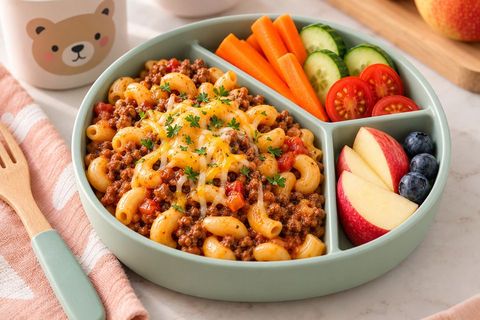
Macaroni with meat sauce
Hot thermos lunch · 25 min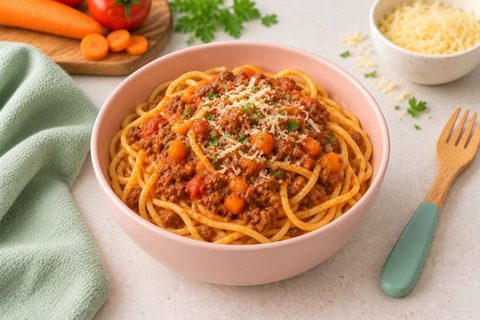
Spaghetti with meat sauce
Hot thermos lunch · 30 min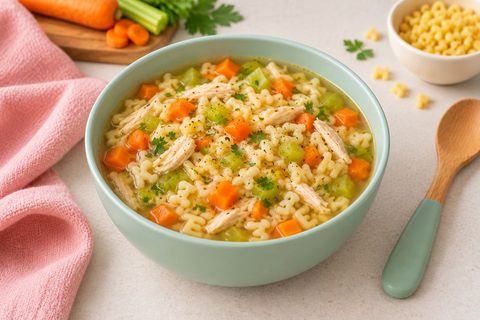
Chicken alphabet noodle soup
Hot thermos lunch · 20 min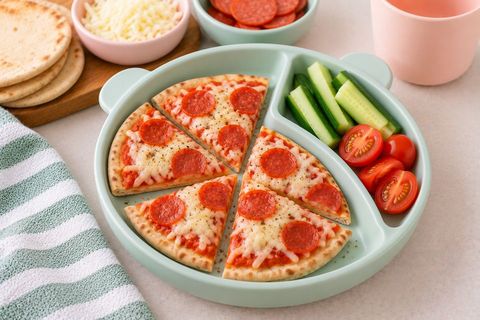
Cold pita pizza
Cold lunch · 15 min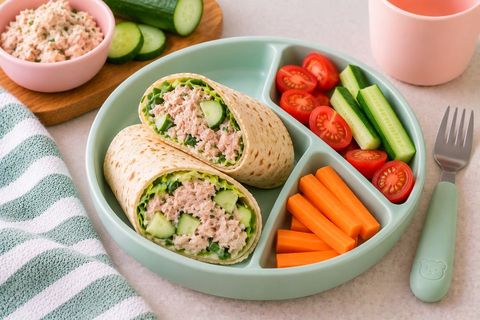
Tuna and cucumber wraps
Cold lunch · 10 min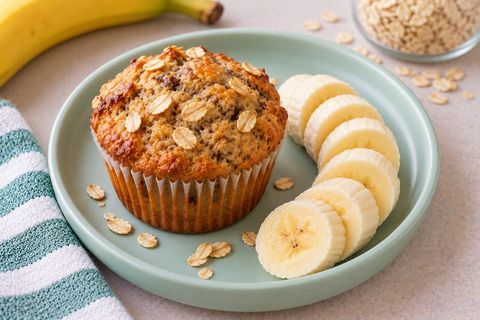
Banana oat muffins
Snack · 30 minFrequently asked questions
What should I pack in my child’s lunch box?
A main dish with a protein and a grain, vegetables or fruit, one or two snacks and a water bottle. Canada’s Food Guide is a good reference for balance.
How can I vary school lunches during the week?
Alternate hot and cold days, and change one thing at a time: the bread, the sauce, the vegetable. Turning supper leftovers into lunch also adds variety with no extra work.
How long does it take to make school lunches?
With a plan on Sunday, a dish cooked ahead and frozen snacks, the morning lunch takes about 10 minutes. Most thermos recipes can be made the night before.
Is there an app to plan kids’ school lunches?
Yes. Every Monday, Lunchou suggests 15 hot or cold lunch ideas and 5 snacks for kindergarten and elementary kids, with age-based portions and a grocery list. It costs CA$9.99 a month or CA$79 a year, with a 3-day free trial.